 Electric Reel Lab
Daytime Swordfish First-Trip Evidence and Planning Details
This is the detailed research behind our short first-trip decision guide. Use it to compare published charter inclusions, retrieval styles, current legal checks, and the order for building a personal system.
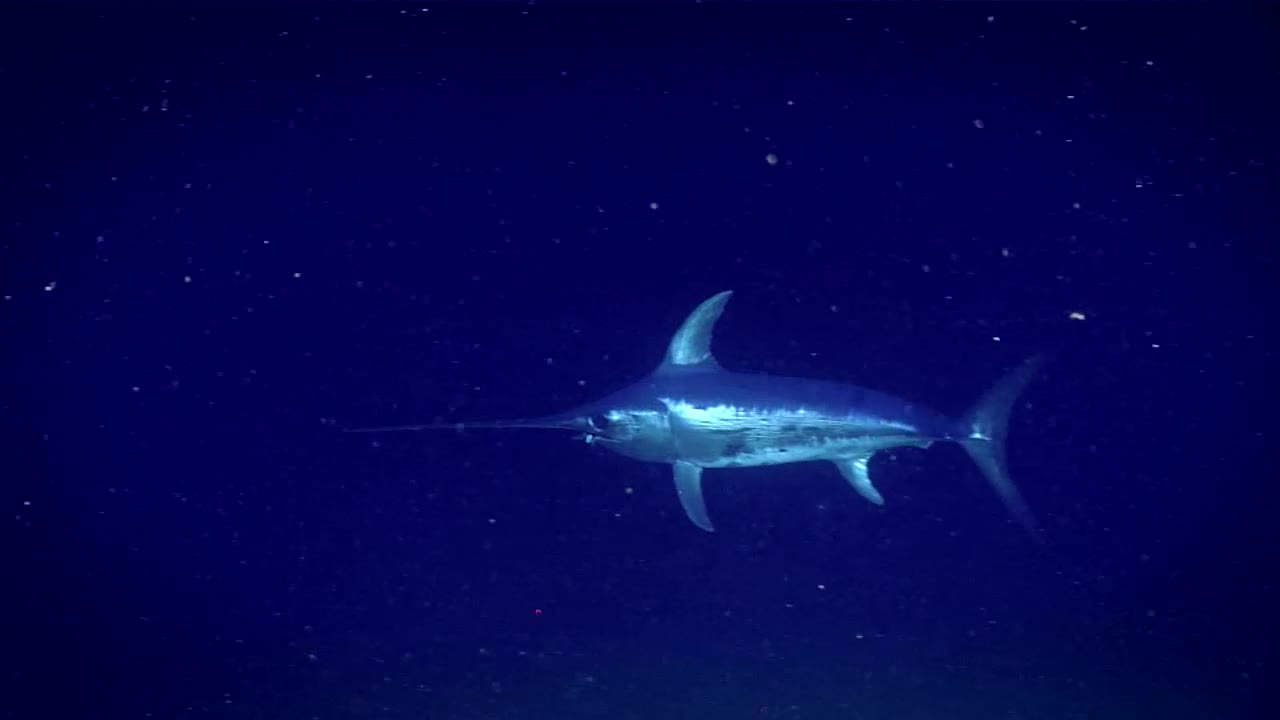
Challenge: The ocean can look empty while a swordfish is hunting hundreds of feet below the boat. NOAA tracking research off Southern California found that tagged swordfish spent most daytime hours at depths of 700–1,400 ft. A daytime trip is an attempt to carry bait into that vertical world, watch for a subtle bite, and meet one of the ocean's most recognizable predators on its own terms.
The electric reel does not find the fish or make it bite. Its practical job is recovering a heavy rig and a very long line after a missed mark, bait check or completed drift so the crew can prepare another presentation. That repeated retrieval is one of the barriers separating an ordinary offshore trip from daytime swordfishing.
But a first trip does not automatically require buying a reel. Florida charter operators publish trips that include specialized rods, reels, bait and tackle. The first decision is therefore not “which electric reel should I order?” It is “what does the boat already provide, and do I want to try this fishery before building my own complete system?”
Start with the experience, not the shopping cart
Daytime swordfishing is a long offshore commitment, not a quick product demonstration. Published Florida examples range from eight-hour trips to ten-hour expeditions, and the exact run, sea state, current, working depth and number of drops vary by boat and day.
A supplied outfit lets a new angler learn the parts that specifications cannot answer alone:
- Whether waiting through a small number of deliberate drops feels exciting or slow
- How the boat detects and calls a bite
- How much of the retrieval and fight is electric, manual or convertible
- Whether the angler prefers a holder-based system or a more hands-on fight
- What food, clothing and physical comfort matter during a full offshore day
This is the honest first gate. If the trip itself is not a fit, owning a reel will not fix that. If the experience becomes the next challenge you want to pursue, the captain's actual setup becomes a far better buying specification than a generic “best reel” list.
Three published charter paths
These operator pages are examples, not rankings or availability claims. Details checked September 5, 2026; confirm the current trip directly with the chosen operator before booking.
| Operator and area | Published swordfish setup | What it means for a first trip |
|---|---|---|
| Florida Sportfishing Charters, Pompano/Fort Lauderdale area | Eight-hour daytime swordfish charter; electric reels and special tackle included; captain, tackle and bait included in the operator's general rate description | A new angler can try the retrieval system without first owning a reel |
| M & M Fishing Charters, Key Largo | Day and night swordfish trips; specialized electric reels and heavy tackle; rods, reels, bait, ice and fishing licenses included | The boat publishes a complete supplied-gear route; current swordfish pricing requires confirmation |
| Double D Charters, North Miami | Electric and manual reels available; the customer can choose; a convertible outfit can use the motor for bait or lead retrieval and allow a manual fight | Electric retrieval does not have to mean giving up every hand-cranked part of the experience |
The important difference is not which operator is “best.” It is that charter-provided, manual and convertible paths all exist. Ask what your trip uses rather than assuming every daytime swordfish boat works the same way.
Send these five questions before buying tackle
We are [number] anglers considering a daytime swordfish trip on [date]. Are the swordfish reel, rod, braid, lead, terminal rig and bait included? Is the reel electric-only, manual-only or convertible during the fight? How long is the trip and how much running time should we expect? What food, weather gear and personal items are not included? If I bring personal gear, what line class, total line amount, power connection and terminal setup must match your boat?
That single message separates two very different purchases.
Boat-supplied first trip: reserve the experience, bring the requested personal items, and learn the method on a system the crew already knows.
Personal-system trip: turn the captain's reply into a reel, line, rod, holder, power and terminal-tackle specification. Do not buy the reel first and hope the rest of the boat fits later.
Electric versus manual is a retrieval decision
The useful question is not whether electric reels are “real fishing.” Ask what work the motor performs on that boat.
At deep daytime depths, a crew may need to retrieve a heavy lead and bait repeatedly even when no fish is attached. An electric system can handle that reset work. Some outfits also allow the angler to hand-crank during the fight; other boats use electric-only or conventional gear.
A manual path can still make sense when the captain's current, depth, lead and method support it and the angler actively wants the physical challenge. An electric or convertible path becomes more attractive when repeated recovery is the limiting job. The boat's method decides the requirement, not a social-media argument about which style counts.
Check the legal gate on the trip date
Atlantic swordfish are managed as highly migratory species. NOAA's current recreational page separates status, minimum size and bag limit by permit and vessel type. Its page checked September 5, 2026 lists the fishery as open and identifies a 47-inch lower-jaw fork length or 25-inch cleithrum-to-caudal-keel length minimum, with different vessel limits by permit type.
NOAA also states that vessels fishing recreationally for Atlantic swordfish need the appropriate HMS Angling or Charter/Headboat permit and that recreational swordfish landings must be reported. Florida's current page gives the state-facing measurement, possession, permit and reporting summary.
Those values are a departure-day check, not permanent copy. Regulations and fishery status can change. Open the live NOAA status page and FWC billfish, tuna and swordfish page, then confirm which permit and reporting responsibility the charter covers.
Build a personal system only after the boat answers
If you decide to return with personal tackle, build in this order:
- Fishing job: daytime swordfish, the boat's method, working depth and expected lead.
- Line: captain-required braid class, total installed amount, diameter and reserve.
- Reel: verified capacity for that exact line and a retrieval role that matches the method.
- Rod and holder: reel-seat, butt and mount geometry that fit both reel and boat.
- Power: approved voltage range, available current, connector, cable reach and protected source.
- Terminal system: leader, hooks, lights, weights, attachment method and replacements specified by the crew.
Use our braid-capacity guide to turn depth, scope and reserve into an installed-line question. Use the battery guide before assuming a boat outlet or portable battery is compatible. The saltwater electric-reel guide separates deep-drop, kite, teaser and in-hand jobs.
If the captain's answers point to a large holder-based Daiwa system, the Tanacom 1200 guide checks its line, rod, holder and power conditions before the Amazon decision. It is a candidate, not a universal swordfish answer.
Know what a blank day means
The appeal is the hunt for a rare, powerful fish in a vast vertical space. That also means waiting, uncertainty and the possibility of returning without one. No reel removes the need for productive water, correct presentation, weather judgment and an experienced crew.
This is not a weakness to hide. It is the choice the angler is making: a full offshore day for a small number of serious opportunities rather than constant action. Someone seeking a relaxed half-day with frequent bites may enjoy a different charter more. Someone drawn to the possibility that the next small movement of the rod tip connects to a swordfish far below the boat may consider the waiting part of the challenge.
First-trip decision checklist
- Daytime swordfish is the specific trip, not a generic offshore booking
- Duration, running time, passenger count and weather policy confirmed
- Reel, rod, braid, lead, rig, bait, ice and license inclusions confirmed
- Electric-only, manual-only or convertible fight identified
- Food, clothing, medication and personal comfort needs planned
- Current NOAA/FWC status, size, permit and reporting responsibilities checked
- Personal tackle purchase deferred until the boat provides its requirements
- If buying later, reel, line, rod, holder, power and terminal rig treated as one system
The first win is not owning the biggest reel. It is discovering whether this is the kind of fishing day you want again. If it is, build the system from the boat backward and return ready to make the next deep drop count.
Sources
- NOAA Fisheries, Catch of Swordfish Takes Off as Southern California Anglers Embrace New Technique: https://www.fisheries.noaa.gov/feature-story/catch-swordfish-takes-southern-california-anglers-embrace-new-technique (accessed 2026-09-05)
- NOAA Fisheries, North Pacific Swordfish: https://www.fisheries.noaa.gov/species/north-pacific-swordfish (accessed 2026-09-05)
- NOAA Fisheries, Recreational Atlantic Swordfish Fishery Statuses, Minimum Sizes, and Bag Limits: https://www.fisheries.noaa.gov/atlantic-highly-migratory-species/recreational-atlantic-swordfish-fishery-statuses-minimum-sizes (accessed 2026-09-05)
- NOAA Fisheries, Atlantic Highly Migratory Species: Recreational Fishermen: https://www.fisheries.noaa.gov/topic/atlantic-highly-migratory-species/recreational-fishermen (accessed 2026-09-05)
- Florida Fish and Wildlife Conservation Commission, Billfish, Tuna, and Swordfish: https://myfwc.com/fishing/saltwater/recreational/billfish-tuna/ (accessed 2026-09-05)
- Florida Sportfishing Charters, Rates: https://www.floridasportfishingcharters.com/rates/ (accessed 2026-09-05)
- M & M Fishing Charters, Offshore Fishing: https://www.mandmfishingcharters.com/fishing-charters/offshore-fishing (accessed 2026-09-05)
- Double D Charters, Charters: https://doubledcharters.com/charters/ (accessed 2026-09-05)