 Electric Reel Lab
Florida Tilefish Trip Planning Evidence
This is the detailed research behind our short Florida tilefish trip planner. Use it for full species, rule, rig, line, release, cold-chain, operator, and source details.
Discovery — Tilefish give an offshore angler two reasons to look deeper: a strange, colorful fish that lives around burrows and broken bottom, and a catch worth bringing to the table. NOAA describes golden tilefish as mild, firm and flaky, with a flavor similar to lobster or crab. Blueline tilefish are also described as mild and sweet.
The challenge is reaching their world repeatedly. Florida's wildlife agency places tilefish on the outer continental shelf and upper slope in roughly 250–1,500 ft of water. Every missed mark, bait check and drift reset can therefore mean recovering hundreds of feet of line and a heavy bottom rig before dropping again.
That is why the trip plan comes before the reel. Start with the exact species, coast and boat. Let those answers determine the legal season, working depth, line, sinker, release gear and power system.
First decide: golden or blueline, Atlantic or Gulf
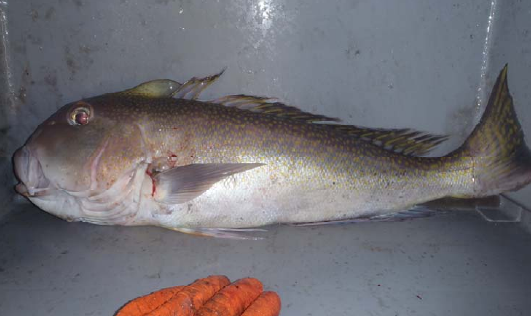
Yellow spots and a fleshy crest before the dorsal fin.
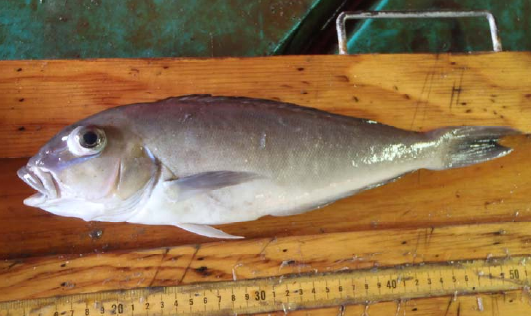
A blue stripe from eye to snout; no fleshy crest.
Specimen photos: NOAA / NMFS / NEFSC / Cooperative Research. NOAA species identification guide, pp. 119–120.
NOAA says golden tilefish grow slowly and can reach 43 inches, while the average harvested fish is 24 inches. The oldest recorded fish lived for decades. Those are species-scale facts—not a promise about the size on one trip.
“Florida tilefish” is not one universal fishing job. FWC publishes different entries for golden and blueline tilefish and separates Atlantic, Gulf, state and federal waters. The bag limits and seasons shown on that live page can change, so check it again for the trip date rather than copying an old number into the tackle plan.
The distinction matters beyond regulation. FWC describes blueline tilefish around ledges and crevices, commonly in about 100–650 ft, while its broader tilefish page describes tilefish habitat from about 250–1,500 ft. The boat's actual grounds—not the largest number on a reel box—should set the capacity requirement.
Why anglers make the long drop
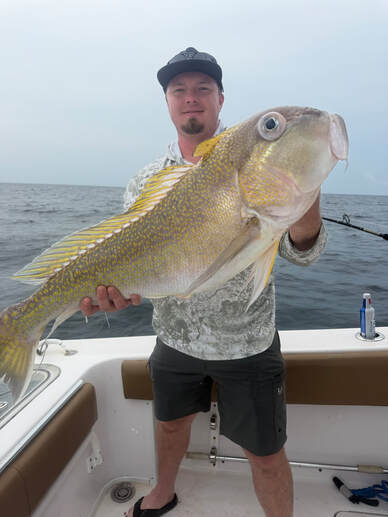
The fishing appeal is equally specific: find productive bottom, present bait close to it, recognize a bite through a long line, then bring the fish and rig all the way back. The reward is a fish many ordinary inshore or nearshore trips never encounter. The work is repeating the entire water column until the boat and bait meet the right piece of habitat.
Where to look for a trip
These operator-published examples show different starting points, not a ranking. Listings checked September 4, 2026; confirm the chosen trip's arrangements when booking.
Nauti Girl
Sebastian Inlet, Space Coast
- Trip style
- Private deep-drop charter; no split trips
- Equipment described by the operator
- Electric rod-and-reel outfits plus a hand-crank jigging option
- Booking terms shown
- Seven-day cancellation notice; captain decides unsafe-weather cancellations; waiver acknowledgment 48 hours before the trip
Just Cuz
Islamorada, Upper Keys
- Trip style
- Dedicated deep drop or swordfish/deep-drop combination; shared/private not specified on the linked page
- Equipment described by the operator
- Electric reels, deep-drop tackle, bait and ice
FUNYET
Little Torch Key, Lower Keys
- Trip style
- Deep-drop outing; shared/private not specified on the linked page
- Equipment described by the operator
- Electric gear for deeper water, a heavy-spinning option, bait, tackle and an iced cooler
- Angler brings
- Sun protection, food and drinks, and a camera
All three describe supplied gear: you can explore the fishing before committing to a personal electric-reel system.
Send one message before booking or buying tackle
First trip using the boat's gear:
We're [number] anglers planning our first tilefish trip on [date]. Which species and coast will we fish, and will we enter federal waters? Please confirm the season, limits, permits and reporting responsibilities. Do you supply the complete reel, rod and holder outfit, bait and release equipment? What should we bring? Who provides ice, cleaning and take-home packing, and should our cooler stay aboard or in the car?
Add only if bringing your own tackle:
For my own outfit, what working depth, braid class and total line amount should I plan for? What hook/rig and sinker range and spare-rig quantities do you require? What voltage, available current, connector and cable reach must my reel match, and are separate batteries allowed?
If the boat supplies a complete outfit, a first trip lets you learn the depth, retrieval workload and handling style before buying your own. If you plan to bring tackle repeatedly, the reply becomes a usable equipment specification. The sections below explain how to turn it into a complete kit.
Treat the bottom rig as a replaceable kit
A deep-drop rig should be planned as a chain of compatible parts and a small replacement inventory—not one mysterious pre-tied item. The boat's proven arrangement comes first because the target, current, bottom and local rules determine what belongs in that chain.
Use this component map when talking to the captain or tackle shop:
| Rig row | Confirm before buying | Why a spare may be needed |
|---|---|---|
| Mainline connection | Swivel, knot or loop used between braid and leader; must pass or stop where the boat expects | A damaged connection can end the entire rig |
| Leader body and branches | Material, strength, length, number of drops and spacing used by the boat | Abrasion, tangles and cutoffs may require rebuilding a section |
| Hooks | Exact legal type, size, offset and quantity for the coast, water and bait | Bent, dulled or lost hooks should not force a return to shore |
| Sinkers | Captain's normal weight range, attachment method and whether sacrificial loss is part of the setup | Current can change, and bottom contact can claim the weight |
| Swivels, snaps and crimps | Strength and size matched across every connection | Small hardware is difficult to substitute correctly offshore |
| Bait and optional attractors | What the boat supplies and what is actually used on its tilefish grounds | Consumption depends on drops, bait checks and unwanted bites |
FWC's current reef-fish gear page controls the legal hook and release-equipment check. It identifies tilefish as reef fish and lists different hook provisions for Atlantic and Gulf waters, state and federal waters, and natural-bait use. Read the live table for the exact trip; do not buy a generic “tilefish rig” and assume its hooks comply everywhere.
Price the agreed kit and replacements separately from the reel, rod, braid and power system. Include any repair materials the crew expects you to carry, and a container for used hooks, clipped leader and damaged hardware. Match replacement parts to the rig rather than buying assorted tackle that cannot be used together.
A practical line-capacity check
Water depth alone is not enough. The line can angle away from the boat, terminal tackle can be lost, and the spool needs usable reserve. Do not convert a depth such as 800 ft directly into “800 ft of line is enough.”
Use this order:
- Take the depth band, braid class and total line amount from the trip plan.
- Check the reel maker's capacity for that exact line or its published diameter.
- Confirm the retailer will spool the requested product and amount.
Our electric-reel braid capacity guide explains the reserve, diameter and installed-length decision. The battery guide covers voltage, current and runtime assumptions.
Release gear belongs in the plan
FWC lists tilefish among Florida reef fish and requires specified reef-fish equipment depending on the water and bait method. Its current gear page includes circle-hook provisions, a dehooking device, and a descending device or venting tool rigged and ready in the situations described there.
Fish brought up from depth can suffer barotrauma. Read the current FWC gear table for the exact coast and jurisdiction, then confirm what is already on the vessel. Release equipment is part of the ready-to-fish system, not an accessory to remember at the dock.
Protect the reason you wanted the fish: plan the cold chain
NOAA's current seafood-handling guidance says a self-caught fish should be buried in ice immediately or placed in an ice slush made with two parts ice to one part water. FDA consumer guidance says refrigerated seafood should be kept at 40°F or below and put on ice or into refrigeration or a freezer promptly.
Those are handling targets, not a universal cooler-size formula. Cooler capacity depends on the boat's expected legal catch, the fish size encountered, trip length, weather, ice form, whether the fish stays whole, and how much space the ice itself occupies.
Size from the fish-and-ice plan, not the product label
Write down the usable inside dimensions and the volume occupied by ice. A cooler advertised by exterior capacity may still be wrong if the longest retained fish cannot lie in the storage arrangement the captain uses.
Use this handoff checklist:
| Stage | Boat or crew answer | Angler answer |
|---|---|---|
| Catch comes aboard | Who identifies, measures and decides retain or release? | Know the current limit and do not assume every tilefish is retained |
| Initial chilling | Fish box, ice or slush method and available space | Bring only equipment the operator requests |
| Dockside processing | Where and how the legal catch is cleaned or packed | Bring clean, leak-resistant packaging if not supplied |
| Drive home | Whether take-home ice or a dock refill is provided | Provide a clean cooler and enough cold capacity for the full drive |
| Home storage | Fish arrives cold and separated from other food | Follow FDA storage guidance; refrigerate at 40°F or below or freeze as appropriate |
The right setup may be the boat's fish box offshore and a clean take-home cooler waiting in your vehicle. Allow room for ice as well as fish, and plan the full drive from dock to refrigerator.
Build the outfit only after the trip has a shape
A tilefish system may include:
- Reel with enough verified capacity for the selected braid
- Compatible rod and secure holder or mount
- Braid, leader and the captain's preferred bottom rig
- Sinkers sized for the expected current and depth
- Correct power cable, connector and approved power source
- Dehooking and descending or venting equipment required for the trip
- Ice and insulated storage sized for the boat's fish-handling plan
- Fresh-water rinse and post-trip maintenance supplies
When the depth, braid and power answers point to a large holder-based outfit, continue to the best electric fishing reels guide and compare complete systems. If a Tanacom 1200 is already on the shortlist, the Tanacom 1200 ownership guide checks capacity, rod, holder and power before the Amazon decision.
Dockside checklist
- Exact target species and coast confirmed
- State or federal water and current season confirmed
- License, vessel permit and reporting responsibility confirmed
- Working depth, braid class and required total line recorded
- Rig, hook and sinker range agreed with the captain
- Reel, rod and holder fit checked
- Voltage, current, cable and connector checked
- Dehooking and release equipment aboard
- Ice, storage and fish-cleaning plan confirmed
- Weather and final go/no-go obtained from the operator
The goal is not to own the biggest electric reel. It is to arrive with a system that lets the boat make productive drops, recover efficiently, release fish correctly and bring a legal catch home in good condition.
Florida tilefish trip FAQ
Should a first-time tilefish angler buy an electric reel before booking?
Not necessarily. Ask whether the charter supplies a complete outfit. Fishing the boat's established reel, rod, line, rig and power system once can reveal the depth, retrieval workload and handling style you want before you build your own setup.
Can reel capacity be chosen from water depth alone?
No. The line may angle in current, the terminal rig can be lost, and the spool needs reserve beyond the vertical depth. Start with the captain's required braid class and total spooled amount, then verify the reel maker's capacity for that line.
Why plan release gear before leaving the dock?
Tilefish are reef fish under Florida's gear framework, and deep-caught fish can show barotrauma. FWC's current reef-fish gear page identifies the hook, dehooking and descending or venting equipment requirements by coast and jurisdiction. Confirm the live table and what the vessel supplies before the trip.
Sources
- Florida Fish and Wildlife Conservation Commission, Tilefish: https://myfwc.com/fishing/saltwater/recreational/tilefish/ (accessed 2026-09-03)
- Florida Fish and Wildlife Conservation Commission, Reef Fish Gear Rules: https://myfwc.com/fishing/saltwater/recreational/gear-rules/ (accessed 2026-09-03)
- Florida Fish and Wildlife Conservation Commission, Blueline Tilefish profile: https://myfwc.com/wildlifehabitats/profiles/saltwater/tilefish/blueline-tilefish/ (accessed 2026-09-03)
- NOAA Fisheries, Golden Tilefish: https://www.fisheries.noaa.gov/species/golden-tilefish (accessed 2026-09-03)
- NOAA Fisheries, Blueline Tilefish: https://www.fisheries.noaa.gov/species/blueline-tilefish (accessed 2026-09-03)
- NOAA Fisheries, Best Practices for Storing and Handling Seafood: https://www.fisheries.noaa.gov/national/sustainable-seafood/how-store-and-handle-seafood (accessed 2026-09-04)
- U.S. Food and Drug Administration, Selecting and Serving Fresh and Frozen Seafood Safely: https://www.fda.gov/food/buy-store-serve-safe-food/selecting-and-serving-fresh-and-frozen-seafood-safely (accessed 2026-09-04)